
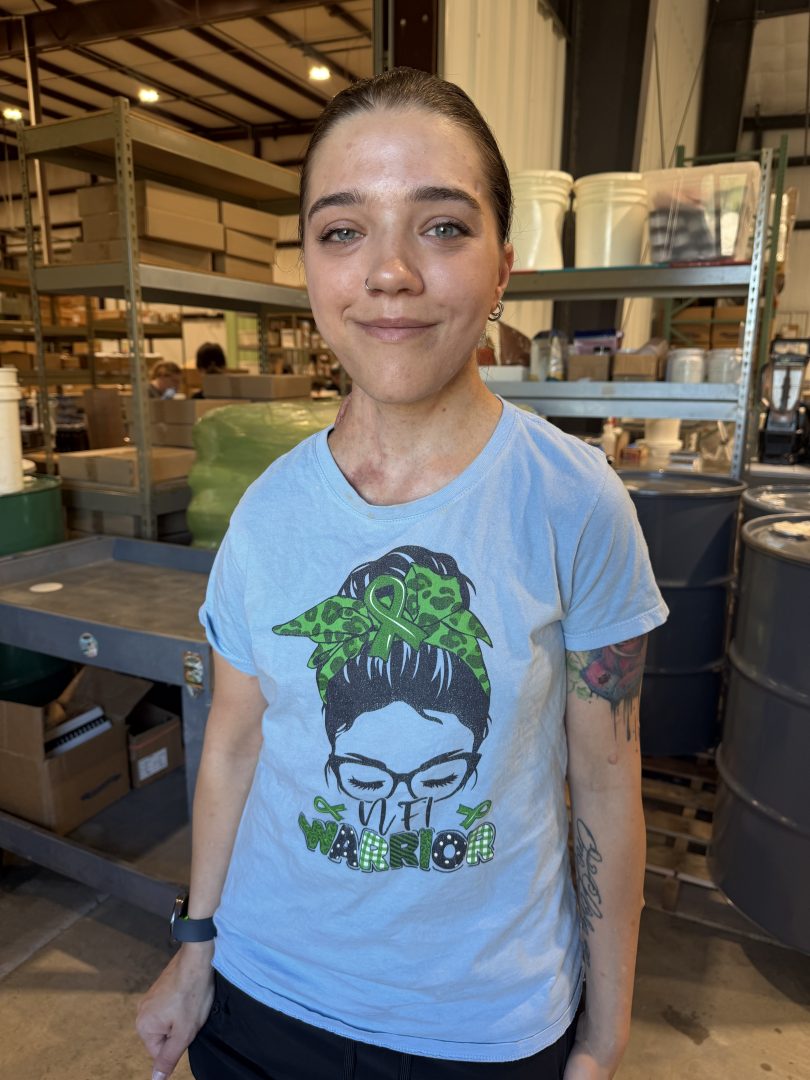
NF1 wasn’t just a random diagnosis. NF1 ran in my family. My father had it, his father had it, and it traced back generations through his family line. It had been passed down for years, long before anyone fully understood what it was or how unpredictable it could be. No one in my family knew that my NF1 could develop into plexiform neurofibromas, a more complex and aggressive form of tumor growth associated with NF1.
NF1 is a genetic disorder caused by a mutation on chromosome 17 that allows tumors to grow off of nerves throughout the body. These tumors are usually benign, but they can still cause serious complications depending on where they grow. Some people with NF1 only have mild symptoms, like small tumors under the skin or learning differences. Others, like me, develop plexiform neurofibromas, larger more complex tumors that grow deep within nerve bundles. These tumors can wrap around muscles, blood vessels, and bones. They don’t grow in a neat, contained way. Instead, they spread like a web through the body, making them difficult and sometimes impossible to fully remove.
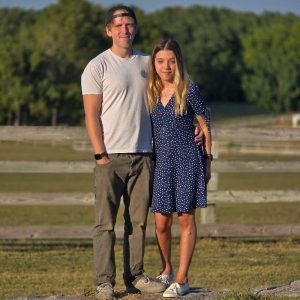 In my case, plexiform tumors wrapped around the right side of my neck and extended into my back and right shoulder, where most could not be removed due to their location. Over time, they caused a major shoulder deformity, scoliosis, and a variety of other com
plications. Two of the most serious tumors grew on my spinal cord and had to be removed. I also developed smaller tumors throughout my body. Most were manageable, but some required surgery.
By the time I was a child, hospitals already felt familiar. I had my first biopsy at one year old. At four, I had my first tumor removal on my carotid artery, the tumor was the size of a grapefruit. At eight years old, I went through 24 sessions of radiation therapy. At nine, I began my first clinical trial chemotherapy. Over the years, I participated in four different clinical trial chemotherapies. I even traveled to the NIH for one of them, hoping for something that might slow the tumors. None of them worked for me. Because of how active and complicated my case was as a child, I was told that I might not live to 18 years old.
This is one of the hardest truths about plexiform neurofibromatosis: there is no guaranteed treatment. Clinical trials and pain management are often the only options. Families hold onto hope, knowing it may not bring results, but choosing it anyway.
I was homeschooled from fifth through ninth grade, which helped me manage surgeries, recovery, and pain. My education didn’t look typical, but neither did my life. By the time I reached adulthood, I had more imaging testing then i could count, at one point i was having multiple MRI and pet scans every other month. I had undergone more than 30 surgeries, including biopsies, tumor removals, and other procedures. I’ve had a brain shunt placed and multiple spinal surgeries.
My first spinal fusion happened when I was 17 because of a tumor growing on my spinal cord. During surgery, they fused my neck from C2 to C4, and it took about six months for me to return to my baseline. The hardest surgery I have gone through was my second spinal fusion.
I was 18 and had just started culinary school when my back began hurting badly. Eventually, I had to drop out. When I went to the doctor, they admitted me for two weeks to try to manage the pain caused by my scoliosis. I was released on a new pain management plan, but six months later my condition had dramatically worsened.
My neck had developed a 90-degree curvature with severe kyphosis and dislocation. There were tears in the dural sac surrounding my spinal cord. I was walking around with my C6 vertebra broken and dislocated. Doctors admitted me immediately and placed me in a gravity traction halo for three weeks. During that time, I started losing the pulse in my right foot. It became ice cold and shook uncontrollably. Surgery followed. Surgeons extended my spinal fusion from C2–C4 to C2–T12 and repaired my dural sac as much as possible.
Recovery wasn’t measured in weeks or months, it took three years for me to walk unassisted again. In the first few months, I needed help doing almost everything. Even today, I still cannot run. My right leg doesn’t always do what I want it to. It’s slower and harder to control a reminder of everything my spinal cord endured.
Throughout my life, I’ve had to relearn how to walk three separate times. At one point, I also had nerve damage in both arms after surgery, which meant more physical therapy retraining my brain and body to communicate again. Progress was slow. Sometimes frustrating. But every small improvement felt like reclaiming a piece of myself.
 There were emotional battles too. I struggled with anxiety and depression, especially during my teenage years. It was hard growing up in a body that constantly changes, a body that requires constant medical intervention. It’s hard to plan a future when your health can shift overnight. Living with plexiform neurofibromatosis means living with uncertainty. Tumors can grow without warning. Surgeries carry risks. Treatments may fail. Pain can return. But it also means learning
But even then, I held onto one phrase: There’s always rain before the rainbow.
Today, at 25 years old, I am stronger than I’ve ever been. My strength isn’t measured by perfection, it’s measured by persistence. I can walk. I can work a part-time job. I can lift around 40 pounds. I can take care of myself. I can ride roller coasters. I travel and go on nature hikes. These may sound like small things, but to me, they are victories. I still live with limitations. I still live with pain. My right leg is different. My spine is fused. Tumors are still present and noticeably visible. But I am living, not just surviving.
What has kept me going is love. Love for my family. My two best friends. My long-term relationship. My pets, especially my cats, and nature. Nature reminds me that life is still beautiful, even when it’s unpredictable. I dream of traveling, seeing new cultures, and experiencing the world beyond hospital walls.
Neurofibromatosis has taken a lot from me. It has taken time, mobility, and certainty. But it has also given me perspective. It has taught me patience, resilience, and gratitude for things many people never think twice about.
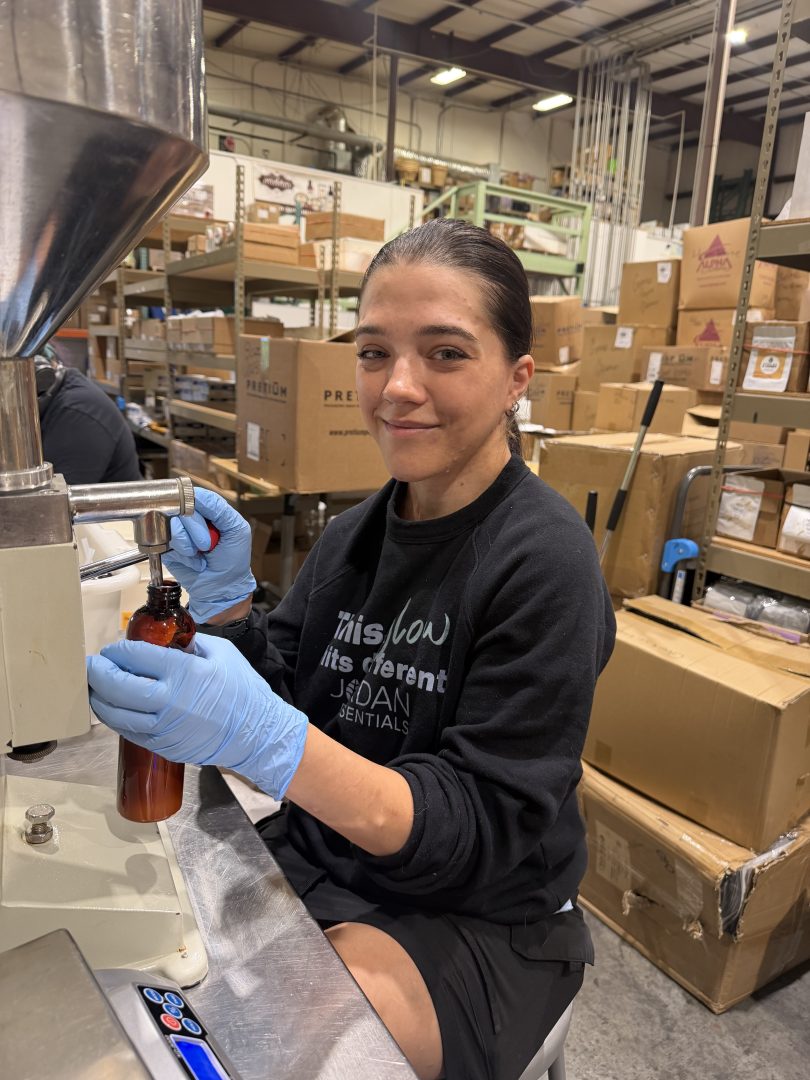
Along the way, I’ve also found small things that help me manage daily discomfort. Warm showers, heating pads, and gentle yoga help, and products like Jordan Essentials Helio or Copa-Calm Sticks and DSS have helped my muscles relax and not hurt as much, especially on more difficult days. Magnesium lotion has also helped with the itching that comes from the tumors. They aren’t cures, but they are simple, natural tools that make my day-to-day life a little more comfortable and manageable.
I am not defined by my disorder. I am defined by how I live with it. Every day, I continue choosing hope, curiosity, and determination. My story isn’t one of defeat, but of endurance and of a life that keeps expanding in ways I once thought were impossible. The future may be uncertain, but it is also open, and I move toward it with strength, gratitude, and quiet confidence.

I am still here.
Still walking.
Still hoping.
Still finding rainbows.
...come to those who sign up for our emails.
Thanks for joining! Look for your first email to arrive soon!
Click an image to Pin